










Building Fine Motor Skills through Play
Fine motor skill development is essential in building the small muscles of the hands that make up the movements needed to grasp and manipulate objects. These skills lay the foundation for everyday tasks such as handwriting, cutting, eating, dressing, and more. Parents can help facilitate these skills by encouraging children to interact, explore, and play with their hands!
Developmental milestones are those that are generally met by most children by a certain age and give insight on average fine motor skill progression. It’s important to remember that every child develops at different rates and the following milestones can serve as a guide to your child’s development and what to watch for.
Grasp
2 years: Holds utensil with fingers instead of palm/fist
3 years: Develops a 3-finger grasp with utensil held between tips of thumb, index and middle fingers HINT: Use broken crayons to promote a 3-finger grasp
4 years: Fingertips control utensil movement
5 years: Develops a mature grasp with established hand dominance
6+ years: Demonstrates pencil control with finger movements
Shapes
2 years: Imitates vertical, horizontal strokes and scribbles
3 years: Copies vertical, horizontal lines, and circles
4 years: Copies cross, diagonal lines, X, and square
5 years: Copies triangle, capital letters, and numbers
6+ years: Copies complex shapes and writes name from memory
Cutting
2 years: Learns to hold scissors with thumb in small hole and elbows down by their side. HINT: Place sticker on thumb as a reminder for “thumbs up” grasp and practice snipping small objects first
3 years: Cuts across a straight line
4 years: Cuts curved lines
5 years: Cuts simple shapes (square, triangle, circle)
6+ years: Cuts complex shapes
Eating
2 years: Uses thumb and index finger to self-feed (cheerios, puffs, etc.)
3 years: Uses fork and spoon with spilling
4 years: Uses fork and spoon with minimal spilling
5 years: Cuts soft food with safety knife
6+ years: Cuts with fork and knife
Dressing
2 years: Undresses independently (with help for fasteners)
3 years: Snaps clothing and can fasten large buttons
4 years: Opens all fasteners and buttons front opening clothing
5 years: Dresses independently, but may need help with small fasteners (button, zip, lace)
6+ years: Begins to master shoe tying
HINT: Practice tying shoes on the table or lap first
Building Skills
These activities will help develop hand strength, stability, hand-eye coordination, bilateral integration, finger control.
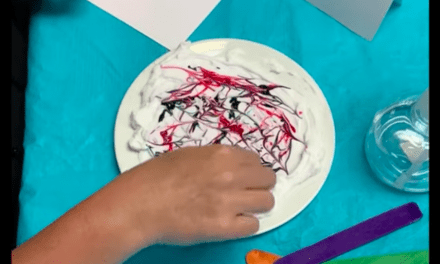
• Play Doh: encourage child to squeeze, pinch, stretch, poke, make shapes, find hidden objects, cut with safety scissors, practice using a butter knife, etc.
• Crafts: tear tissue paper, squeeze glue, bend pipe cleaners, punch holes
• Paint with Q tips, sponges, fingers
• Play with LEGOs and Magna-Tiles to build hand strength
• Use tweezers/clothespins to move small objects in a matching/sorting game (beads, pompoms, cotton balls, etc.)
• Lace macaroni noodles, cheerios, etc. on string to make jewelry
• Build with marshmallows/playdoh and toothpicks
Getting Started
Encourage your child to be curious, explore and take on new challenges. Fine motor skills develop with time and practice. Here are a few great resources to learn more.
Skyler Kennamer is a UMMC OTD student completing her Level II Fieldwork at Laskin Therapy Group under supervision of Shelby Ray, MS, OTR/L.