





















Lazy Mississippi Days Under a Piano
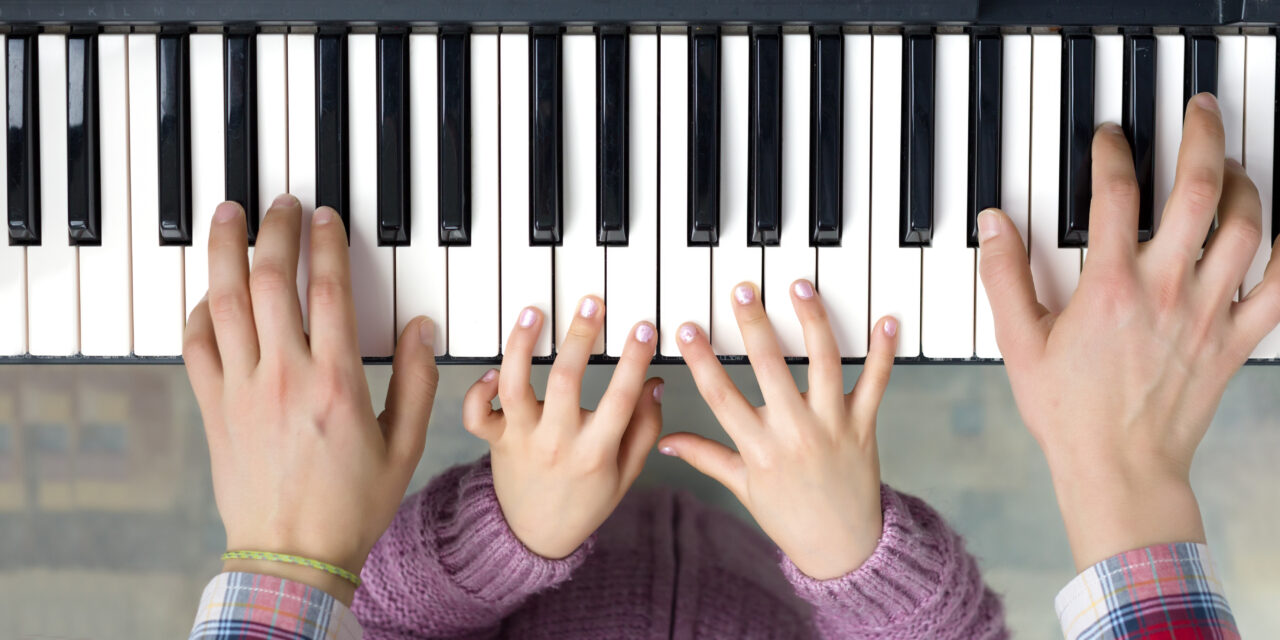
Dr. David J. Saccardi knows well that an education in music should begin as soon as possible.
“It is never too early to begin music instruction with a young child,” he explained. “From 27 weeks of gestation, children in the womb can hear and perceive sounds, such as their mother’s voice or music played in the room.”
I feel sure that my early exposure to music of all types helped me become who I am today.
The first memory I can actually recall involved observing all the moving parts located on the underbelly of the out-of-tune baby grand piano my father would play for hours every day. Even though every single note was off-kilter in some way, it didn’t seem to bother him, because the richness and sentimentality of the music outweighed a need for perfection. I’d sleep away the lazy Mississippi summer days underneath that piano, with an old German Shepherd by my side.
One day, when I was a few years old, I stood up from my slumber and asked if I could sing as my father played.
“I’ve been waiting for you to say that,” he said.
We were quite the duo.
At age five, I was offered a choice one summer: I had to participate in sport, or in a musical. This may have been the most important decision of my life. I was cast in the role of “Little Alice” in “Alice in Wonderland, Jr.” at our summer theater program in Diamondhead. Walking onstage and seeing an audience smile became addictive. I was hooked.
I continued to perform – almost always in musicals – at the Diamondhead Country Club, M.A.P./Waveland Civic Center, Bay St. Louis Little Theatre, and when I was a little older, at theaters across state lines in Slidell, Louisiana. From “Schoolhouse Rock, Jr.” to “101 Dalmations” to “Willy Wonka, Jr.,” I participated in every children’s show possible. While a student at East Hancock Elementary, I was inspired any time music was used to teach. I even performed sometimes at the open mic night at Mockingbird Cafe in Bay St. Louis. I just couldn’t get enough!
At this point, I’ve participated in over 25 theatrical productions throughout my life, ranging from Broadway-style to musical revue to opera. My main source of income – and part of what funds my life as a college student – is singing professionally. I sing weekly as a solo artist at a French restaurant and perform at coffee shops, nightclubs, weddings, and festivals/farmer’s markets with various bands and duos of different genres ranging from classic rock to folk.
Music and performance has always remained a sort of constant for me. I learned that theater, music and dance are time-based art forms. Each performance, each movement, is particular to one night, and may never be recreated exactly the same again. Even at age five, that beauty gripped me.
I feel certain that the most important parts of me must have come from my rich experiences in music education while growing up in Diamondhead, Mississippi.
Today, I am studying Vocal Music Education at Louisiana State University, so I can share the wonders of music with the next generation of kids. Dr. David J. Saccardi is one of my professors, and he has a lot to say about how early exposure to music really and truly can change lives, the way it did mine. He’s an Assistant Professor of Music Education at LSU, where he teaches classes for future music teachers.
“Early childhood music education has been shown to help young children develop pro-social skills, improved coordination, and more-developed motor synchronization,” he explained. “Parents of children who participate in childhood music programs such as music lessons through the Suzuki method have reported that their children had increased school readiness over their peers who had not participated in music, and that their children showed more focus and attention during school instruction.”
Of course, many parents have already heard the phrase, “music makes us smarter.” But according to Dr. Saccardi, it’s even more than that.
“In many ways, participating in music, either formally through early childhood instruction or informally as part of organic community music making, makes an individual a more effective learner, more sociable, and more able to face the challenges of their young lives,” he said.
So it’s great if it is a formal music education, but if not, even a casual, but regular exposure to music can lead to lifelong benefits. That passion might even start with something as simple and accidental as lazily wasting Mississippi summers by laying under a piano.
Elaina Bachman is studying Vocal Music Education at Louisiana State University. She believes her heavy exposure to music as a small child in south Mississippi has stuck with her and continues to shape her to this day.