

























Eczema: There’s a Solution for Itchy Skin in Kids
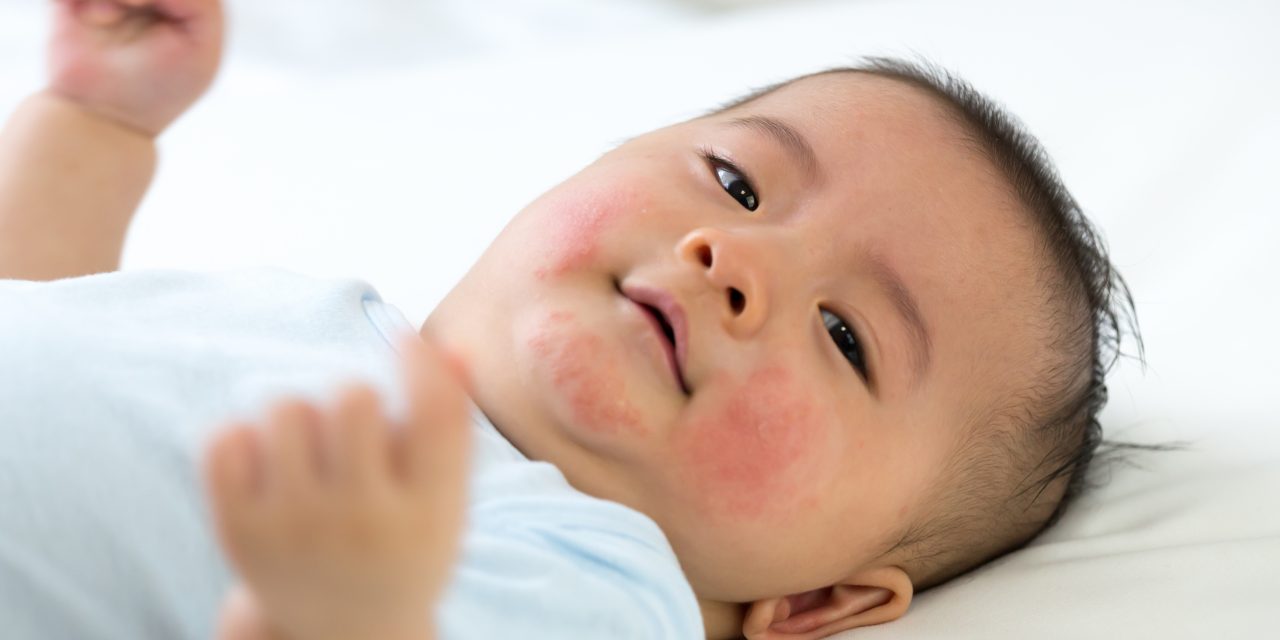
Atopic dermatitis (AD), better known as eczema, affects approximately 20 percent of children. It is a chronic skin condition characterized by itchy, red, irritated skin and can occur at any age, but is very common in children.
AD is due to a defect in the child’s skin barrier function, which makes them more sensitive to everyday things into which they come in contact. Soaps, detergents, fragrances and even climate and environmental conditions can affect a child’s skin barrier function.
AD is a skin condition we treat daily in our dermatology practice. As a mother of two girls who suffer with eczema, I can say that every day at the house can be a struggle. With time, practice and patience, my family has become well-adapted to know which creams and ointments make it better, as well as which products to avoid. My girls’ skin will be better and worse with very little change in our daily skincare routine.
Our bathroom cabinets look like a pharmacy full of skin barrier ointments, topical steroids and non-steroidal ointments. My six year old daughter knows what ointment to put on, depending upon how itchy her skin feels. I chase my three-year-old through the house, however, to apply medication to her irritated areas. My children’s eczema varies daily and is just as different as their personalities.
The inability to cure eczema is frustrating to parents because no one wants to see their child scratch themselves until they bleed. Eczema can be hard to manage and can demand a significant time commitment to maintain a regimen that helps restore skin barrier function.
Initially, treatment for eczema starts with changing products that come in contact with the skin. Lotions, soaps, detergents and perfumes can be triggers, causing irritation to the skin. Switching to unscented laundry detergent and soaps will help decrease irritation. Use of petroleum-based products instead of alcohol-based lotions and creams helps decrease the burning and stinging that comes with application of these products to irritated and excoriated skin. Applying topical medications after lukewarm baths helps to lock in moisture. Children may also need “wet wraps” as an occlusive dressing to keep medication in contact with skin and not on clothes and furniture. This can be performed with petroleum-based products with or without topical steroids. If over-the-counter medications are not helping control eczema, please contact your pediatrician or dermatologist office.
The majority of patients at Pine Belt Dermatology, like my own children, can be well-controlled with topical medications, but some children may never achieve remission with use of topical medications. Dupilumab, a systemic medication for the treatment of AD, recently received FDA approval for the treatment of patients aged six years and older. Dupilumab is approved for patients who suffer with moderate to severe atopic dermatitis and have experienced inadequate control of their condition. After three years of clinical experience with Dupilumab, we can attest to how well this medication works and how it ultimately changes the lives of adults and now even small children for the better.
Dupilumab is an injectable medication that helps control the patient’s itching. Often, the itch precedes the rash. Calming down the “itch that rashes” allows for better control of atopic dermatitis. Seeing children sleep through the night, regain their natural skin color and texture, and smile because they are happy to wear shorts and sleeveless shirts makes our job so enjoyable. Parents are able see the changes in their children’s personalities, and these changes allow them to be a child again. They can enjoy playing outside without itching and without ridicule.
Our goal at Pine Belt Dermatology is to help to achieve clear skin for patients. Each patient is different, and medical providers can help tailor a treatment plan specific to the patient. It takes effort from patients, caregivers, and providers to provide adequate care. With appropriate therapy and strict patient compliance, pediatric AD patients can be managed effectively with relative ease.
For further tips, visit the link below to the American Academy of Dermatology website: https://www.aad.org/dermatology-a-to-z/diseases-and-treatments/a—d/atopic-dermatitis
—
Patients should feel confident and comfortable with their cosmetic dermatology solutions and skin care treatments. Southern Mississippi’s top-ranking board-certified physician assistant, Kristen Richardson, PA-C, strives to help patients with their skincare needs; she treats men, women, and children at the Pine Belt Dermatology locations in Hattiesburg, Mississippi.Kristen currently resides in Hattiesburg, Mississippi with her husband and their two daughters.